
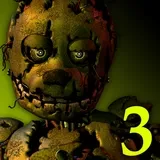
Five Nights at Freddy’s 3
Five Nights at Freddy’s 3 is a horror game with puzzle elements, set decades after Freddy’s Pizza has become a legend. As a night watchman, you monitor cameras, including those in ventilation ducts, while managing limited electricity and responding to sound cues and distractions.
Screenshots
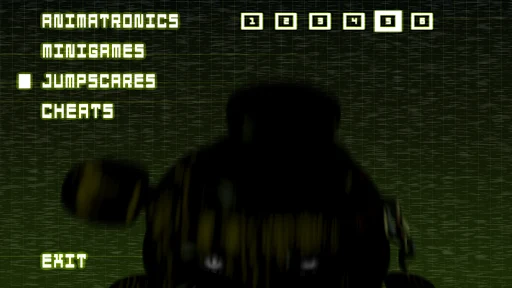
About this app
Five Nights at Freddy’s 3 is a horror game with puzzle elements in which you take the role of a night watchman facing danger during a series of shifts. The story is set 30 years after the events associated with Freddy’s Pizza have faded into legend. Your central task is to monitor the surroundings through security cameras and stay alive as a dangerous character approaches. Camera feeds, ventilation routes, sound cues, and a limited electricity supply shape how you respond from one moment to the next.
Monitoring cameras while conserving power
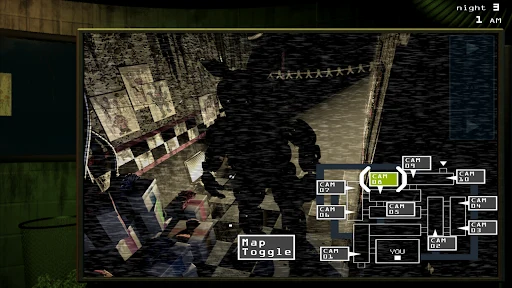
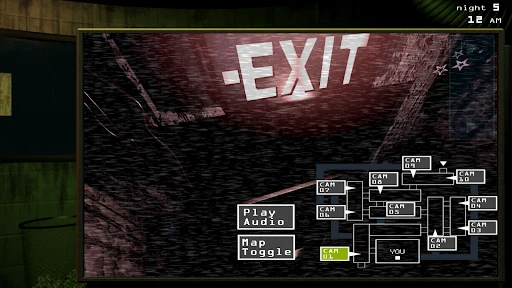
Security cameras are the main way to observe what is happening around you. You can switch between feeds to check different areas, including cameras inside the ventilation ducts. That broader view matters because the ducts are identified as a particular challenge in this installment. However, moving between cameras slowly drains the night’s limited electricity. Monitoring is therefore a trade-off: checking more feeds gives you more visual information, but each switch uses a resource that you cannot spend without consequence.
Power management is tied directly to survival. The source describes a budget that limits how much electricity is available each night, and warns that running out leaves you exposed to the threat. This makes camera use more than a routine check. You need to weigh the value of another look against the cost of keeping the monitoring system active, rather than treating every camera as something to watch continuously.
Sound cues, vents, and distractions
Play combines camera monitoring with audio cues, so the screen is not the only source of information. The description highlights this combination as a way to focus attention on the central threat. It also distinguishes the main dangerous character from illusions that can distract you. Those distractions complicate observation: what appears on a feed may not provide the whole picture, so sound and camera information work together as you decide what to check next.
Ventilation cameras add another layer to that observation loop. The ducts are described as a tricky problem, making them a specific part of the night watch rather than just another room to scan. The available information does not spell out every response or rule for handling them, but it establishes that monitoring the vents is part of managing the danger. Touch controls are also mentioned for making system resets quick, which connects the controls to moments when a prompt response is important.
Nights and rising pressure
The game’s progress is organized around successive nights, with each night increasing the difficulty. That structure gives the player a changing challenge instead of presenting every shift as identical. The description associates later nights with less stable rides and harder-to-control electronic figures, while the central task remains surviving by observing and responding. The pressure therefore builds through the night sequence as the player has to apply the same monitoring and power-management decisions under tougher conditions.
Threats and atmosphere
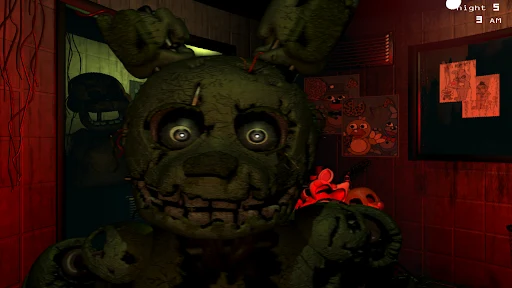
The account of the threat emphasizes one dangerous character, supported by distracting illusions, rather than several active monsters requiring equal attention. This narrower focus makes the camera and sound information central to play: mistakes can leave you less prepared, and the source describes learning from those errors as part of the challenge. The setting is presented as an eerie amusement-park environment, with dim lighting and creepy toys and dolls placed around its spaces. Sounds from the pipes contribute to the unsettling atmosphere while also drawing attention to the ventilation system.
Overall, the documented play loop is built around watching, listening, conserving power, and responding as the nights grow more demanding. The story’s time jump supplies context for the setting, while the camera network and vent monitoring define the practical work of each shift. The available description does not establish further details about endings, unlocks, or online play, so the core focus remains the night watch and its limited-resource survival challenge.
Version history
View all14 Feb 2026 · stable