

Lawgivers II
Lawgivers II is a political simulation in which you build a career through elections and take part in governing a country. Its systems cover campaigns, legislation, government formation, international relations, and political events.
Screenshots
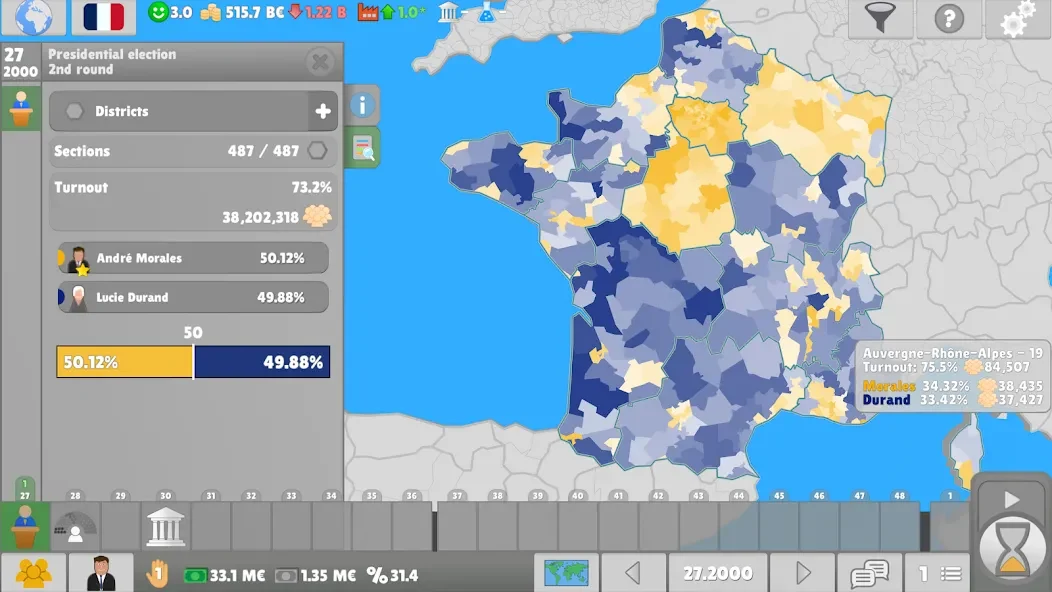
About this app
Lawgivers II is a political simulation in which you work to gain office and lead a country. The game follows a political career from grassroots elections toward national leadership, with decisions spanning campaigns, laws, government, and relations with other nations.
How do you build a political career?
You begin as a grassroots politician and seek support through elections. Campaigning involves making promises and persuading voters, while winning office can open a path to higher positions. The game presents elections as a sandbox for trying different strategies, and each playable nation begins with its own political system and rules.
The supplied description suggests starting with local or state-level governance before pursuing national office. Smaller elections can build a politician’s reputation and provide experience for later contests. It also recommends paying attention to how decisions affect public approval among different demographic groups, rather than treating voter support as a single, unchanging measure.
What can you do with the world map?
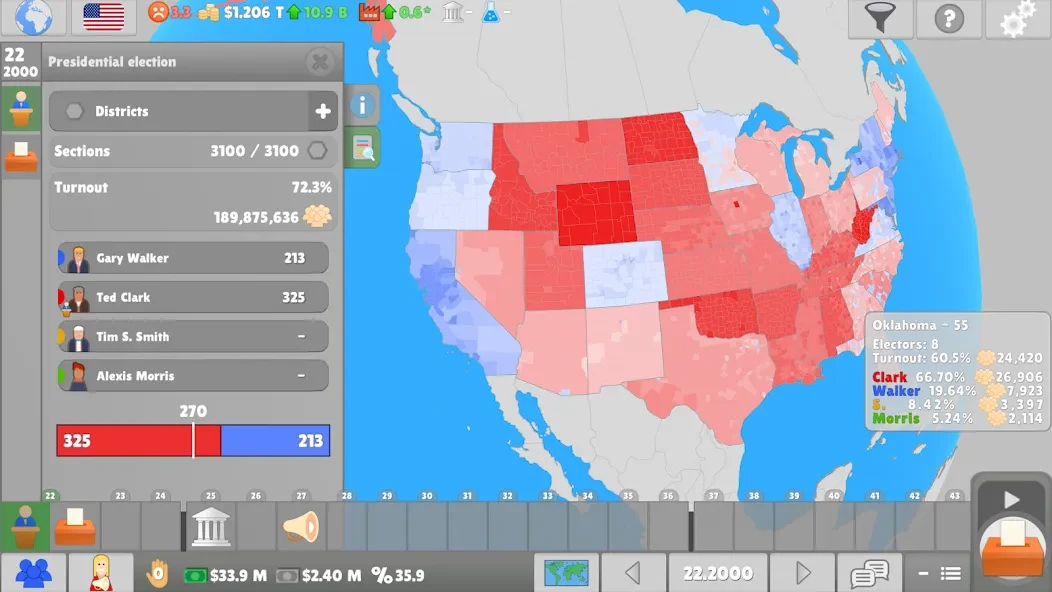
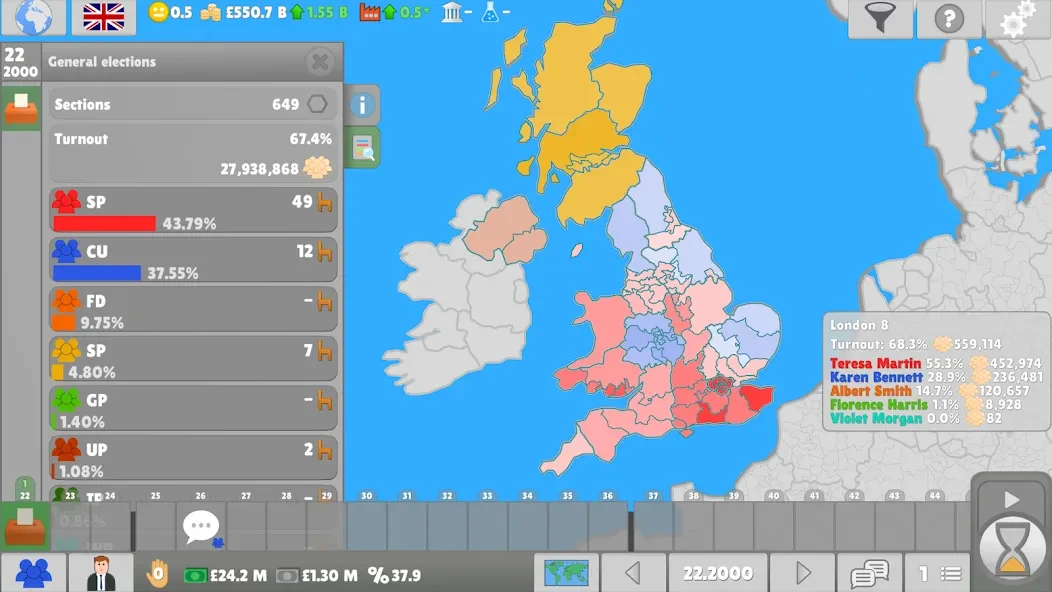
The game features a hand-crafted world map showing countries, subdivisions such as regions or states, and cities. Some playable nations also have electoral districts. Map filters can display information including population density, foreign relations, GDP growth, military spending, media outreach, and election outcomes. The map can also be projected in 2D, giving players another way to view the world.
These details connect national administration with political geography. Electoral districts are editable, and the game describes gerrymandering as one possible election strategy. The map’s filters let players examine different kinds of information about countries and regions, rather than focusing only on campaign results.
How do elections and legislation work?
During a game, lawmakers may propose changing the electoral system. The described options are proportional, majoritarian, and mixed systems. Players can organize debates about matters affecting citizens, and election campaigns require efforts to gain voter support. The source also describes experimenting with election strategies while trying to implement policies that avoid national bankruptcy.
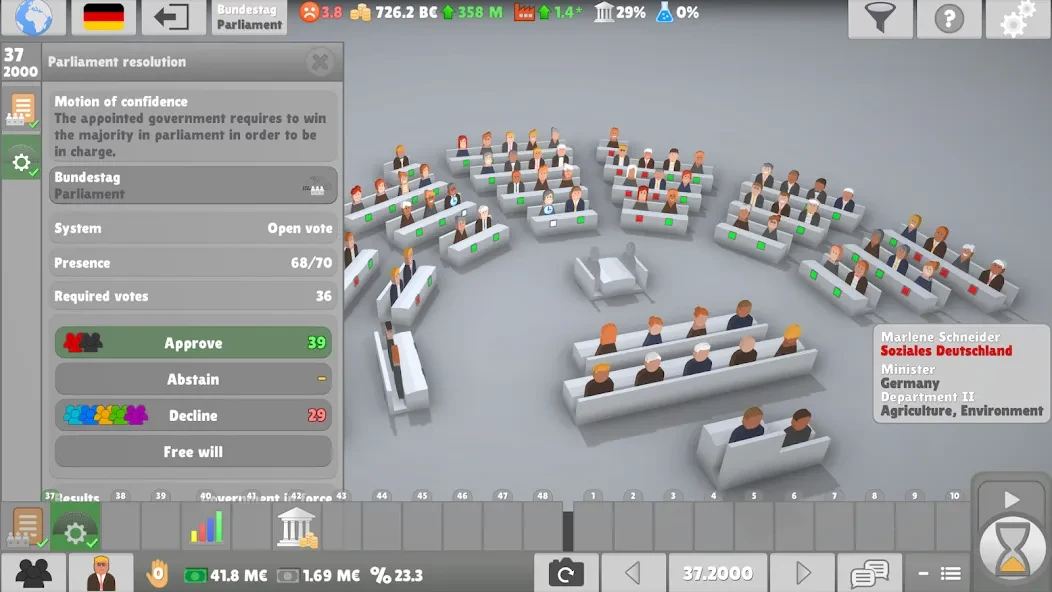
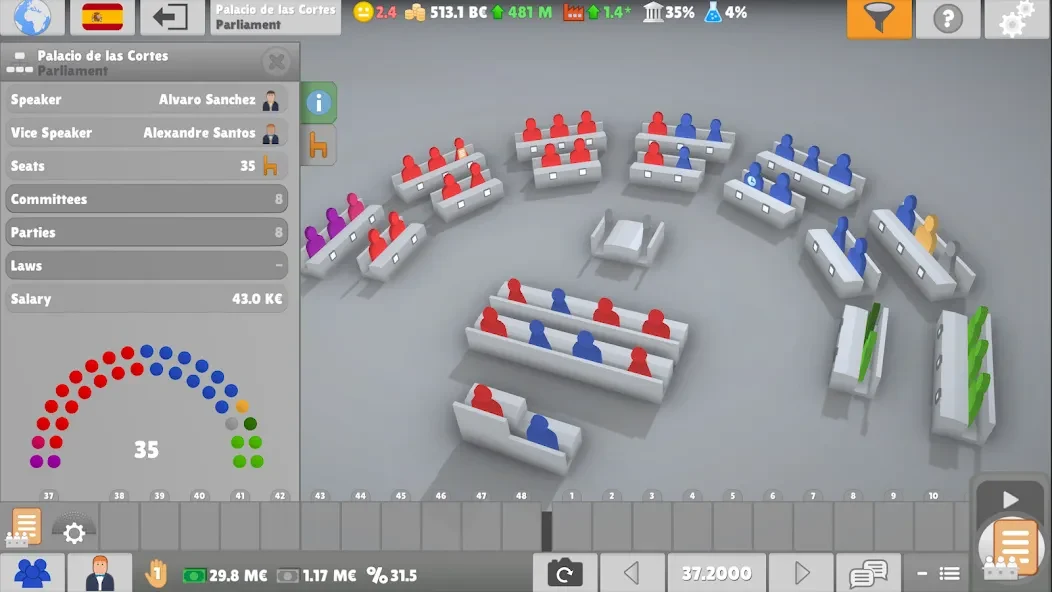
After entering parliament or congress, players can approve or abolish laws. Bills can be personalized and considered article by article, and lawmakers have individual opinions about laws and governing. Their histories and trust can matter during difficult periods. Players can elect a speaker, create custom committees, request a secret vote on a bill, or initiate a motion to impeach the president.
Constitutional amendments provide another level of decision-making. Players choose whether a particular bill becomes part of the constitution or is passed as an ordinary law. This gives legislation a role in setting how important national institutions operate, in addition to determining individual policies.
What forms of government can you lead?
The available route to national leadership depends on the country’s political structure. In presidential and semi-presidential republics, you can run for the highest seat; in parliamentary republics, you can become prime minister. A government can be formed by one party or through a coalition, and it may face motions of no confidence.
The description says that a government can sometimes bypass parliament, but warns that doing so brings political consequences. It also presents coalition-building as a strategic choice: parties with shared aims may strengthen legislative power, while alliances formed for convenience can create risks. These are options and considerations described for the game, not guaranteed outcomes.
How do diplomacy, trade, and conflict affect the country?
As head of government, you can visit other countries and pursue strategic alliances to secure resources for citizens. The description notes that nations may offer different things, including expertise, raw materials, and produce. Players can also seek to influence nearby regions through their country’s ideology.
War is possible, but the source explicitly describes it as strongly discouraged, with potentially severe economic repercussions. Pressing the red button can also bring political consequences and sanctions. These risks make international choices part of the broader task of governing, rather than a separate route without domestic effects.
What other political forces and play options are included?
Organizations and lobbies can influence a country. Players may seek their support by hiring a representative, or choose not to pursue that route. The game also includes multiplayer: friends can join together in a coalition to form a government, or remain in opposition while waiting for an opportunity to gain power.
Random events mean that each game can unfold differently. The description also mentions modding support through Steamworks, with mods able to add countries, laws, events, parameters, resources, ideologies, and other content. It says lawmakers’ appearances can be customized with imported portraits. The supplied information does not specify which of these modding options are available in the Android version.
What approach does the game’s guidance suggest?
The supplied tips recommend monitoring public opinion and choosing coalition partners carefully. They also suggest balancing reform with political stability: gradual changes are presented as a way to avoid destabilizing a political base while pursuing an agenda. These are the source’s strategic suggestions; the game’s sandbox systems leave room to try different approaches.
Version history
View all23 Mar 2026 · stable